From Landfill to Lab Bench: How PCB Recycling Is Becoming a Strategic Asset for American Electronics
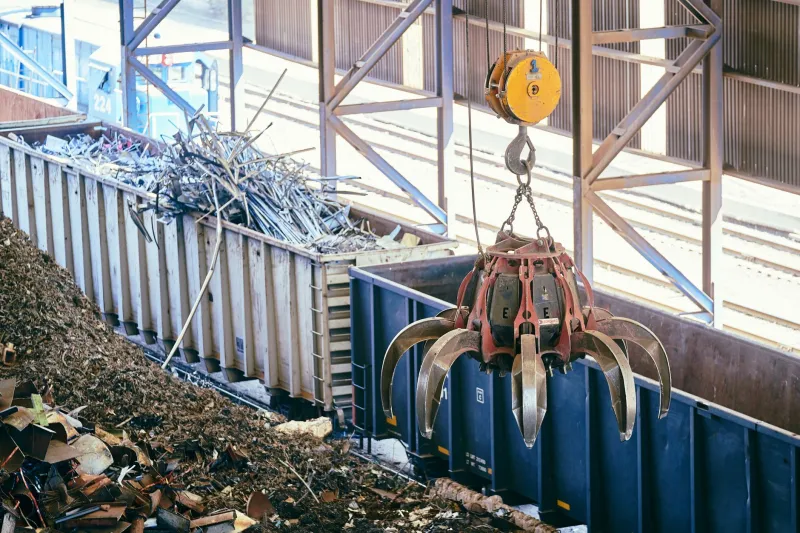
For decades, the fate of a retired circuit board in the United States followed a predictable and largely unexamined path: into a bin, onto a truck, and eventually into a landfill or, at best, an overseas recycling facility operating under conditions that would not pass domestic environmental scrutiny. That trajectory is changing. Driven by a convergence of regulatory pressure, raw material economics, and genuine corporate sustainability commitments, PCB recycling in America is undergoing a quiet but significant transformation—and the companies paying attention are finding competitive advantage in what their peers are still treating as waste.
The Regulatory Terrain Is Shifting Underfoot
The European Union's Waste Electrical and Electronic Equipment Directive—universally known as WEEE—has set the global baseline for e-waste responsibility since the early 2000s. While the United States lacks a single federal equivalent, the regulatory landscape has grown considerably more complex at the state level. California's Electronic Waste Recycling Act, enacted in 2003, established a producer-funded take-back framework that has since influenced legislation in more than two dozen other states. Washington, Oregon, and New York have each enacted their own electronics stewardship programs with varying producer responsibility requirements.
For US manufacturers supplying products into international markets, WEEE compliance is not optional—it is a market access requirement. And as the EU moves toward stricter enforcement of its Ecodesign for Sustainable Products Regulation, the documentation burden around material content, recyclability, and end-of-life handling is increasing. American electronics firms that treat recycling as an afterthought are accumulating compliance risk that will eventually surface as a market barrier.
Beyond formal regulation, the Securities and Exchange Commission's evolving climate disclosure rules are pushing publicly traded electronics companies to account for their environmental footprint in ways that make e-waste management a board-level concern rather than a facilities management detail.
The Economics of What a Circuit Board Actually Contains
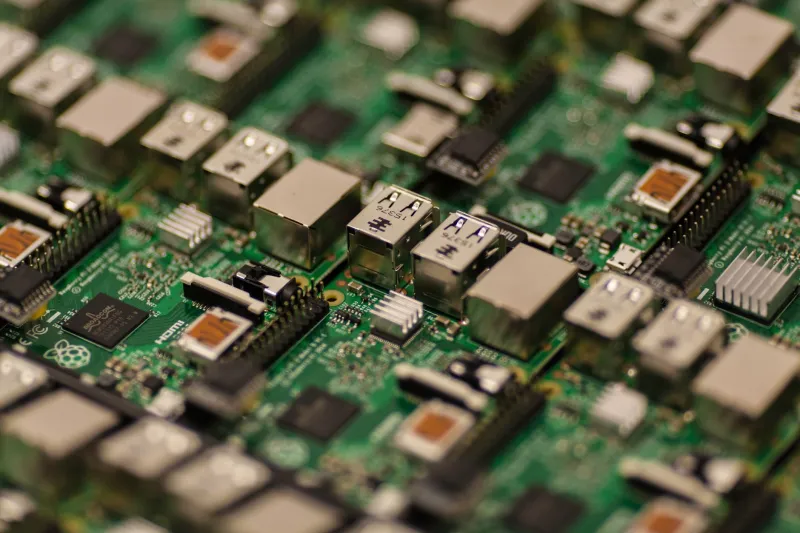
The business case for serious PCB recycling begins with understanding what a circuit board is worth at end of life. A metric ton of discarded circuit boards contains, on average, between 200 and 400 grams of gold—a concentration roughly 40 to 80 times greater than that found in high-grade gold ore. The same ton may yield 1.5 to 2 kilograms of palladium, several kilograms of silver, and meaningful quantities of copper, tin, and nickel. At current commodity prices, the recoverable precious metal value in a ton of mixed PCB scrap can exceed $10,000.
Rare earth elements present a different but equally compelling case. Neodymium, terbium, and dysprosium—used in motors, sensors, and certain passive components—are not recoverable in commercial quantities from most current recycling processes, but the technology to extract them is advancing rapidly. Given that China controls the majority of global rare earth production and that US supply chain policy is actively seeking to reduce that dependence, the ability to reclaim these materials domestically carries strategic value that extends well beyond the spot commodity market.
The current challenge is that conventional recycling infrastructure—shredding, smelting, chemical leaching—is energy-intensive and often destroys the very material structures that would allow more selective, higher-value recovery. The companies gaining competitive ground are those investing in more sophisticated separation technologies.
American Innovators Rewriting the Playbook
Several US-based companies and research-backed startups are developing approaches to PCB material recovery that go well beyond the traditional smelter model.
Urban Mining Company, based in Texas, has focused on recovering neodymium-iron-boron magnets from electronic waste—including components mounted on PCBs—and reprocessing them into new magnet alloys. Their model directly addresses rare earth supply chain vulnerability and has attracted attention from US defense and automotive supply chain stakeholders.
Pyrogenesis Canada, while headquartered in Montreal, operates processing partnerships with US facilities and has developed plasma-based metal recovery systems capable of processing PCB material at higher efficiency and lower environmental impact than conventional smelting. Their technology has been evaluated by several American contract manufacturers seeking to establish domestic closed-loop material programs.
On the startup side, companies such as Nth Cycle—founded out of MIT research—have developed electrochemical refining systems specifically designed for recovering critical minerals from electronic waste streams with significantly lower energy consumption than hydrometallurgical alternatives. Their modular systems are being positioned for deployment at or near electronics manufacturing sites, potentially enabling manufacturers to recover value from their own scrap streams rather than shipping material to centralized processors.
Larger US contract manufacturers are also beginning to formalize their recycling programs as a differentiator in customer conversations. Several Tier 1 EMS providers have begun offering customers detailed end-of-life material recovery reporting as part of their service packages—a capability that resonates particularly with customers in the automotive, medical device, and defense sectors who face their own downstream sustainability requirements.
Circular Economy Thinking as Supply Chain Strategy
Perhaps the most strategically significant reframing happening in the US electronics industry is the recognition that recycling is not merely a cost of doing business—it is a potential input to future production. As global supply chains for copper, gold, and critical minerals face increasing volatility from geopolitical disruption, export controls, and resource nationalism, the ability to reclaim usable materials from domestic waste streams takes on supply chain resilience value that has nothing to do with environmental optics.
The Defense Advanced Research Projects Agency and the Department of Energy have both funded research into domestic critical mineral recovery from e-waste, recognizing that the United States currently imports the vast majority of the rare earth elements and refined battery materials that underpin modern defense electronics. PCB recycling, in this context, becomes an element of national industrial policy rather than simply a corporate sustainability initiative.
For electronics manufacturers, the practical implication is that building a documented, auditable recycling program today positions the company favorably for future supply agreements, government contracting preferences, and customer sustainability certifications that are becoming standard requirements in procurement processes.
What Forward-Thinking Manufacturers Are Doing Now
The gap between companies that are extracting value from end-of-life PCBs and those that are not is widening. The steps being taken by more advanced organizations include establishing formal material take-back agreements with certified domestic recyclers, conducting material content audits on their own product lines to quantify recoverable value, and integrating design-for-recyclability principles into new product development—specifying materials and component attachment methods that simplify downstream recovery.
At the design level, choices made during PCB layout and material specification have direct consequences for recyclability. Boards designed with halogen-free laminates, for instance, are easier and cleaner to process thermally. Minimizing the use of conformal coatings that chemically bond to board surfaces reduces the complexity of material separation at end of life. These are not hypothetical future considerations—they are design decisions being made in engineering offices today that will determine recycling economics five to ten years from now.
The Opportunity Is Now
The printed circuit board has always been understood as the foundation of electronic function. What is becoming increasingly clear is that it is also a repository of material value that the American electronics industry has largely been surrendering to overseas processors or landfills. The regulatory environment is tightening, the economics of material recovery are improving, and the supply chain arguments for domestic recycling capacity are compelling and growing stronger.
For US electronics companies willing to treat recycling as an engineering and business problem rather than a compliance checkbox, the opportunity to turn end-of-life boards into a genuine competitive asset is real, present, and available today.