Bringing It Home: How American PCB Manufacturers Are Rebuilding Supply Chain Independence
For decades, the economics of global electronics manufacturing pointed in one direction. Labor was cheaper overseas. Raw material pipelines ran through Asia. And the cost differential between offshore fabrication and domestic production was wide enough that most US electronics companies treated the question of where to source their PCBs as essentially settled. Then came a sequence of shocks — a global pandemic, a semiconductor shortage, escalating trade tensions, and a freight system under severe strain — that forced the industry to reconsider assumptions it had held for a generation.
The reconsideration is no longer theoretical. Across the United States, PCB manufacturers are investing in capacity, renegotiating supplier relationships, and constructing supply chains that can withstand disruption rather than simply recover from it. The question is not whether reshoring is happening — it clearly is — but whether the structural conditions now exist to make it durable.
The Policy Tailwind: CHIPS Act and Beyond
No honest accounting of the current reshoring moment can ignore the regulatory environment that is actively subsidizing it. The CHIPS and Science Act of 2022 committed more than $52 billion to semiconductor manufacturing and research on American soil. While the legislation's primary focus is semiconductor fabrication, its downstream effects on the PCB ecosystem are substantial. Semiconductor fabs require domestic PCB supply to support their development and production workflows. Federal procurement preferences embedded in the legislation and associated defense authorization acts create demand signals that domestic PCB producers can plan around.
Beyond the CHIPS Act, the Department of Defense has maintained longstanding concerns about supply chain concentration in PCB production. The DoD's Trusted Foundry program and the Printed Circuit Board Association of America's advocacy work have both contributed to a policy environment that, for the first time in many years, is actively working in favor of domestic PCB investment rather than against it.
Manufacturers who dismissed government incentives as temporary or insufficient in prior years are reassessing that position. When federal funding offsets capital expenditure on advanced fabrication equipment and workforce training, the internal rate of return on reshoring investments improves materially.
The Real Cost Comparison: Reshoring vs. Offshoring in 2024
The conventional wisdom that offshore PCB sourcing is simply cheaper has always been more nuanced than it appeared. Total landed cost — which incorporates freight, duties, inventory carrying costs, quality inspection overhead, and the cost of lead time variability — tells a different story than unit price alone.
During the supply chain disruptions of 2020 through 2022, US electronics manufacturers discovered just how expensive lead time variability could be. Companies that had optimized their procurement around 8- to 12-week offshore lead times found themselves facing 20- to 30-week delays. Production lines stopped. Customer commitments were missed. In some cases, companies lost design wins to competitors who could deliver. The financial impact of those disruptions, when fully accounted for, frequently exceeded years of savings from lower offshore unit costs.
The calculus has shifted further as ocean freight rates, while retreating from their 2021 peaks, have stabilized at levels meaningfully higher than their pre-pandemic baseline. Tariff structures on Chinese-manufactured PCBs have also increased the landed cost of offshore sourcing, narrowing the price gap with domestic alternatives.
For high-mix, lower-volume production — common in industrial, defense, and medical electronics — domestic sourcing increasingly wins on total cost when lead time, minimum order quantities, and the cost of holding buffer inventory are properly weighted.
Nearshoring and the Regional Supplier Network
Not every reshoring strategy involves moving all production to US soil. A growing number of American electronics manufacturers are pursuing nearshoring — relocating fabrication and assembly to Mexico and other Western Hemisphere locations — as a middle path between full domestic production and deep offshore dependency.
Nearshoring offers several advantages relevant to PCB supply chains. Geographic proximity reduces freight transit times and costs. Shared time zones simplify engineering collaboration and quality oversight. Trade agreements like the United States-Mexico-Canada Agreement (USMCA) provide favorable tariff treatment for qualifying manufactured goods. And cultural and logistical familiarity reduces the coordination friction that can erode the theoretical advantages of offshore sourcing.
Several US PCB producers have established or expanded partnerships with Mexican fabricators, creating hybrid supply models where standard, high-volume layers are produced nearshore while specialized, tight-tolerance work is handled domestically. This approach allows manufacturers to offer competitive pricing on commodity products while maintaining the domestic capacity needed for advanced applications.
Building Redundancy Into the Supplier Network
Perhaps the most significant strategic shift underway is the move from single-source to multi-source supplier architectures. For years, procurement optimization pushed electronics companies toward consolidating supplier relationships to maximize volume leverage and simplify vendor management. The disruptions of recent years exposed the fragility of that model.
US PCB manufacturers building resilient supply chains are now deliberately qualifying multiple sources for critical raw materials — copper-clad laminate, specialty chemicals, imaging films, and fabrication equipment consumables. The upfront cost of maintaining multiple qualified suppliers is real. The insurance value, measured against the cost of a production stoppage, is difficult to overstate.
This supplier diversification extends to geographic distribution. Companies that previously sourced all of their laminate from a single Asian supplier are now qualifying domestic or European alternatives, accepting a modest cost premium in exchange for supply security. The conversation with procurement leadership has shifted from unit cost optimization to risk-adjusted cost optimization.
The Workforce Challenge Nobody Talks About Enough
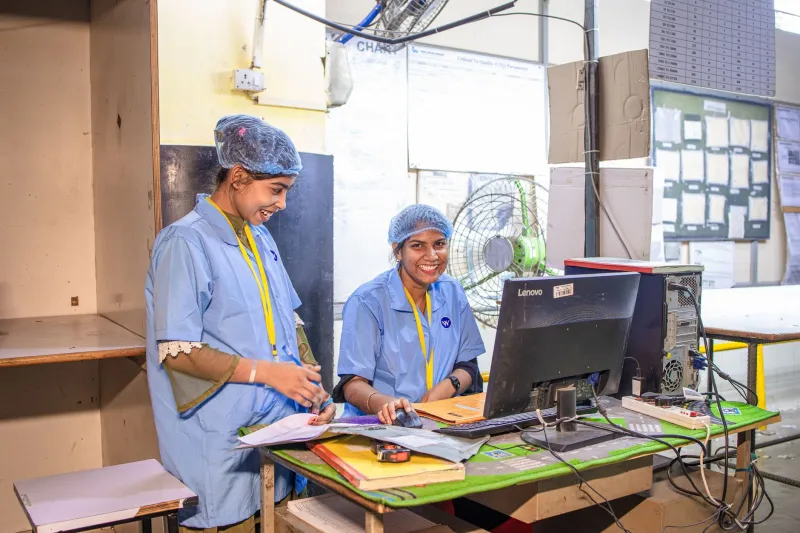
Every discussion of PCB reshoring eventually arrives at the same constraint: skilled labor. Advanced PCB fabrication requires a workforce with expertise in photolithography, electroplating, impedance-controlled drilling, and automated optical inspection — skills that take years to develop and that the US manufacturing sector has not prioritized building for decades.
Manufacturers investing in domestic capacity are addressing this through partnerships with community colleges and technical institutes, apprenticeship programs aligned with IPC certification standards, and recruiting from adjacent industries where precision manufacturing skills transfer. The workforce development challenge is real, but it is also solvable — and companies that invest in building their technical talent pipeline now are establishing competitive advantages that will be difficult to replicate quickly.
The Outlook: Structural Shift or Cyclical Correction?
Skepticism about reshoring's durability is not unreasonable. Previous periods of supply chain anxiety have produced announcements of domestic investment that quietly faded once offshore sourcing became convenient again. The difference this time, many industry observers argue, is that the drivers of reshoring are structural rather than cyclical — rooted in geopolitical realities, regulatory frameworks, and a genuine reassessment of risk tolerance that is unlikely to reverse simply because freight rates normalize.
For US PCB manufacturers, the opportunity is clear. The companies that move decisively — investing in capacity, building redundant supplier networks, developing workforce capability, and engaging with available policy incentives — are positioning themselves to serve a domestic electronics industry that is, for the first time in a generation, actively looking to reduce its offshore dependency.
Engineering tomorrow's circuits today means more than designing better boards. It means building the supply chains capable of delivering them reliably, regardless of what the global environment throws at us next.