Designed Into a Corner: Why Component Lifecycle Planning Must Begin at the First Schematic

Photo: U.S. Marine Corps photo by Staff Sgt. Scott Jenkins, Public domain, via Wikimedia Commons
Obsolescence rarely announces itself at a convenient moment. For most electronics manufacturers, the discovery arrives mid-production—when a critical component vanishes from supplier catalogs and the engineering team faces a costly redesign scramble that could have been avoided entirely. Building lifecycle awareness directly into the design phase is no longer optional; it is a foundational discipline that separates resilient products from expensive liabilities.
Yet the industry continues to treat component obsolescence as a supply chain problem rather than an engineering one. That misclassification costs American manufacturers hundreds of millions of dollars annually in emergency redesigns, production halts, and last-time-buy inventory gambles. The fix does not begin in the procurement department. It begins at the first schematic.
The Obsolescence Trap Nobody Talks About
The average product lifecycle for a mid-complexity PCB-based system in industrial, medical, or defense electronics routinely exceeds ten years. Semiconductor manufacturers, however, operate on entirely different timelines. A microcontroller that appears robust and widely available in year one of a product's design cycle may receive an end-of-life notice by year four. When that notice arrives after production tooling is finalized and firmware is locked to a specific silicon revision, the consequences extend well beyond a simple component swap.
Consider a mid-sized US industrial controls manufacturer that spent the better part of two years designing a programmable logic controller platform around a specific 32-bit processor family. The design passed verification, cleared regulatory certifications, and entered production. Eighteen months later, the semiconductor vendor issued a product discontinuation notice with a twelve-month last-order window. The firmware team estimated a minimum six-month porting effort to a compatible alternative—time the production schedule could not absorb. The company ultimately purchased a three-year buffer of inventory at a significant premium, storing components under climate-controlled conditions and deferring the inevitable redesign. The carrying cost alone ran into seven figures.
This scenario is not exceptional. It is routine. And it is preventable.
Lifecycle Status as a Design Constraint
The most effective organizations have begun treating component lifecycle status with the same rigor they apply to electrical performance specifications. During the initial design phase, every part selected for a bill of materials should be evaluated not only for its functional parameters but for its position in the product lifecycle curve.
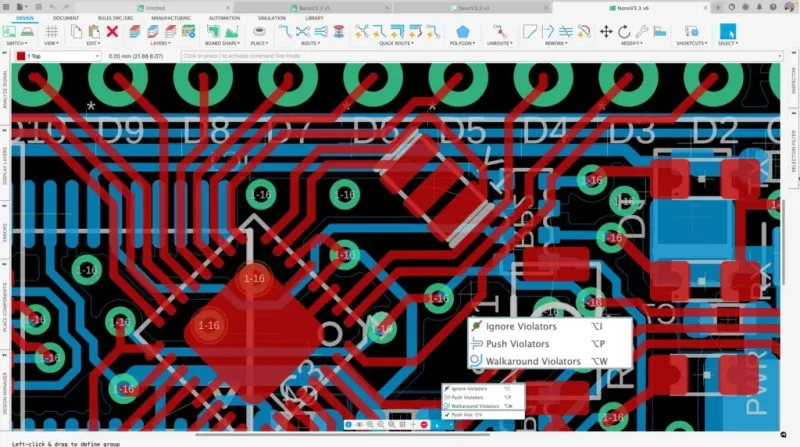
Distributors and component intelligence platforms—including IHS Markit's BOM Intelligence, SiliconExpert, and Octopart—provide lifecycle status data that categorizes components as active, not recommended for new designs (NRND), end-of-life, or discontinued. Filtering BOM selections through these categories during schematic capture, rather than after layout is complete, eliminates a substantial portion of obsolescence risk before it can compound.
The discipline extends beyond simply avoiding NRND designations. Engineers should assess a component's market longevity based on the vendor's historical discontinuation patterns, the breadth of the part's customer base, and whether the underlying technology is being superseded by an emerging standard. A DRAM device tied to a transitional memory architecture, for instance, carries inherent obsolescence risk regardless of its current active status.
Alternative Footprints and Pin-Compatible Substitutes
One of the most practical tools available to design engineers is the deliberate selection of components for which qualified, pin-compatible alternatives already exist. When a primary component is chosen with one or more validated second-source options, the manufacturing team retains the ability to pivot without triggering a full redesign cycle.
This strategy requires coordination between the PCB layout engineer and the procurement team at the earliest possible stage. Footprint standardization plays a central role. If a primary microcontroller occupies a unique package with no equivalent in a competing vendor's portfolio, the design is structurally fragile from a supply perspective. Selecting components that conform to industry-standard package dimensions—or that share pinout compatibility across multiple vendors—builds optionality into the hardware at zero additional cost.
Documenting these alternatives formally within the BOM, rather than relying on informal engineering knowledge, is equally critical. When a component enters end-of-life status two years after a product launches, the engineer who selected the original part may no longer be with the organization. A BOM that explicitly lists qualified substitutes, including any firmware or layout adjustments required, compresses the response timeline dramatically.
Vendor Diversification Beyond the Primary Source
Single-source components represent the highest obsolescence risk in any BOM. When a part is produced by only one manufacturer, the design team has no leverage and no alternatives when production ceases. The CHIPS and Science Act has renewed domestic attention to supply chain resilience, but the structural reality of semiconductor manufacturing means that many specialized components will remain single-source for years to come.
For these parts, the appropriate engineering response is a combination of proactive lifecycle monitoring and strategic inventory positioning. Establishing a direct relationship with the component manufacturer—separate from the distribution channel—provides earlier access to end-of-life notifications and occasionally the opportunity to participate in last-time-buy programs at favorable pricing. Several large US defense contractors have formalized this practice, embedding component engineers within their design teams whose sole responsibility is tracking lifecycle status across active programs.
For commercial manufacturers without dedicated lifecycle engineering staff, third-party monitoring services provide automated alerts when parts in an active BOM receive status changes. The subscription cost for such services is marginal relative to the expense of an unplanned redesign.
Designing for Replaceability
Beyond component selection, the physical architecture of a PCB can be structured to reduce the blast radius of any single obsolescence event. Modular design approaches—where processing functions, memory, and communication interfaces are isolated on defined subsections of the board—allow targeted redesigns that leave the broader system untouched.
This philosophy aligns closely with the design-for-manufacturability principles that govern high-quality PCB development. A board designed with replaceability in mind is not only more resilient to component obsolescence; it is also easier to certify, test, and update over a long production run.
For high-reliability applications in aerospace, medical devices, and defense electronics, this approach is increasingly mandated rather than recommended. Standards bodies and prime contractors have recognized that lifecycle fragility is a systemic risk, and they are beginning to require documented obsolescence mitigation plans as part of design review submissions.
The Competitive Argument for Acting Early
There is a straightforward business case for embedding lifecycle planning into year one of any design program. The engineering hours required to evaluate alternative footprints and document qualified substitutes during initial design are a fraction of the cost incurred when the same work is performed under production pressure. The procurement leverage available when sourcing buffer inventory before a last-time-buy window closes dwarfs what is available when the window is already closing.
American electronics manufacturers competing in markets where product longevity is a selling point—industrial automation, medical instrumentation, energy infrastructure—cannot afford to treat obsolescence as someone else's problem. It is an engineering problem, and like every engineering problem, it yields most readily to those who address it first.
The bill of materials is not merely a purchasing document. It is a forward-looking engineering commitment. Treating it as such, from the first schematic to the last production run, is what separates products that endure from products that expire.