Ghost Components: How Counterfeit Semiconductors Enter Legitimate PCB Supply Chains and What Engineers Must Do to Stop Them
A Problem Hidden in Plain Sight
Every bill of materials tells a story. Component designators, manufacturer part numbers, approved vendor lists—together they represent an engineer's intent, translated into sourcing instructions that procurement teams execute under real-world constraints. What that BOM cannot communicate, however, is whether the physical part that arrives at the receiving dock is actually what it claims to be.
Counterfeit semiconductors are not a niche concern confined to gray-market back alleys. According to estimates from the Semiconductor Industry Association and independent research bodies, counterfeit components cost the global electronics industry billions of dollars annually. More troubling still, a significant portion of those parts find their way into products that power critical infrastructure, medical devices, and defense systems—not because procurement teams are negligent, but because the counterfeiting ecosystem has grown sophisticated enough to defeat casual inspection.
For PCB design and manufacturing operations across the United States, the risk is both persistent and evolving. Understanding how these components enter legitimate supply chains—and what engineers must verify before production begins—is no longer optional.
How Counterfeits Enter the Pipeline
The path a counterfeit component travels from a disreputable source to a finished PCB assembly is rarely dramatic. More often, it exploits the mundane pressures of procurement: tight timelines, allocation shortages, and the temptation to source from secondary distributors when authorized channels run dry.
Several infiltration vectors account for the majority of incidents:
Secondary and spot-market brokers. When franchised distributors report stock-outs, procurement teams frequently turn to independent brokers to close the gap. Some of these brokers operate responsibly; many do not. Without traceability documentation linking parts back to an original manufacturer, there is no reliable way to confirm authenticity through the supply chain record alone.
Recycled and remarked components. A substantial share of counterfeit semiconductors are salvaged from discarded electronics, cleaned, and remarked to appear as new, high-specification parts. A microcontroller pulled from obsolete consumer hardware may be relabeled to impersonate a current-production industrial-grade device—same package, different performance envelope, and no tolerance for the operating conditions it will face.
Cloned and substandard fabrications. In some cases, counterfeit parts are not recycled at all but manufactured outright—produced to approximate the physical form factor of a legitimate component while cutting corners on the die, materials, or process controls that determine actual performance. These parts may function adequately under benign test conditions and fail only when pushed toward the edges of their rated specifications.
Documentation forgery. Counterfeit operations have become adept at producing convincing paperwork: certificates of conformance, date codes, country-of-origin declarations, and even falsified test data. A part accompanied by a plausible-looking document trail can clear receiving inspection processes that rely primarily on administrative review.
The Cost of Getting It Wrong
The consequences of counterfeit components reaching production are not hypothetical. In 2012, a US Senate Armed Services Committee investigation documented over 1,800 cases of suspected counterfeit electronic parts in military supply chains, tracing many of them to suppliers in China. The components in question had found their way into aircraft systems, missile programs, and other defense platforms—not through deliberate sabotage, but through procurement failures that allowed unverified parts to enter qualified supply chains.
In the commercial sector, the damage tends to be quieter but no less costly. A telecommunications equipment manufacturer that experiences field failures traced to counterfeit capacitors faces recall expenses, warranty liabilities, and reputational damage that can dwarf the original savings achieved by sourcing from an unauthorized broker. For medical device manufacturers, the stakes include regulatory consequences and potential patient harm.
The pattern is consistent: the initial cost savings from gray-market sourcing are almost always erased—and frequently exceeded—by the downstream consequences of failure.
Verification Methods That Actually Work
Authentication is not a single test. It is a layered process that combines documentation review, physical inspection, and electrical characterization. Engineers and quality teams that treat it as a checkbox exercise will eventually encounter a counterfeit sophisticated enough to pass any single screening method.
Traceability documentation review. Every component should arrive with a documented chain of custody linking it to the original manufacturer. This includes purchase orders, shipping records, and certificates of conformance that can be cross-referenced against manufacturer records. Authorized distributors—those holding franchise agreements with component manufacturers—provide the most reliable traceability baseline.
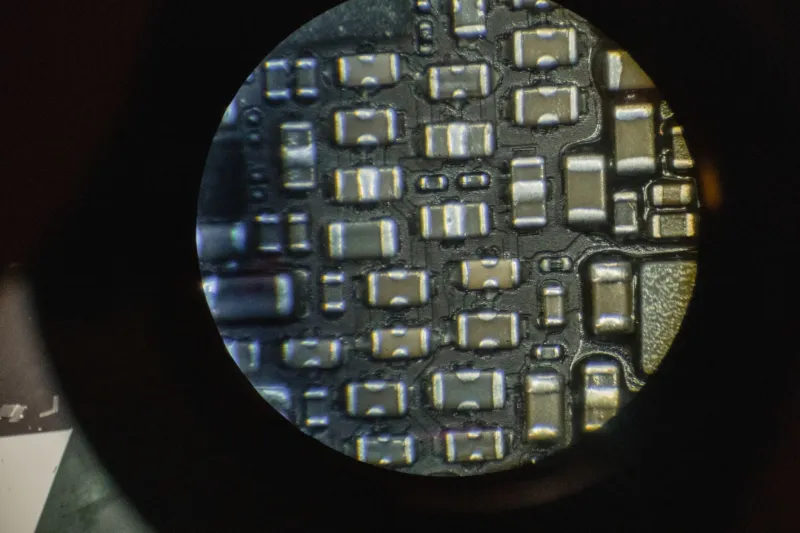
Physical and dimensional inspection. Visual examination under magnification can reveal a surprising number of counterfeits. Inspectors should look for inconsistent marking fonts, irregular surface finishes, misaligned lead spacing, evidence of sanding or remarking on package surfaces, and date codes that conflict with a component's known production history. Automated optical inspection systems can accelerate this process for high-volume receiving operations.
X-ray inspection. Non-destructive X-ray imaging allows inspectors to examine the internal die structure of a component without opening the package. Counterfeit parts frequently reveal themselves through die size mismatches, absent or repositioned bond wires, and internal geometries inconsistent with the manufacturer's published device construction.
Electrical characterization testing. Functional testing against the manufacturer's datasheet parameters—including boundary conditions, temperature performance, and timing characteristics—remains one of the most reliable methods for identifying substandard or remarked components. Parts that appear legitimate under ambient conditions may fail when tested at the temperature extremes or supply voltages their specifications claim to support.
Third-party testing laboratories. For high-stakes applications or components sourced outside authorized channels, independent testing through accredited laboratories provides an additional layer of assurance. Organizations such as ERAI and the Independent Distributors of Electronics Association (IDEA) publish standards and maintain databases of known counterfeit incidents that procurement teams can reference.
Reshoring Does Not Automatically Solve This Problem
There is a reasonable assumption, common in discussions about domestic PCB manufacturing, that moving production back to US soil insulates operations from supply chain risk. The assumption is partially correct and substantially incomplete.
Reshoring PCB assembly does reduce exposure to certain categories of geopolitical and logistics risk. It does not, however, change the origin of the components that populate those boards. The vast majority of semiconductor devices used in American electronics—regardless of where the final PCB is assembled—are fabricated in Asia. Components sourced from non-authorized channels carry the same counterfeiting risk whether they are shipped to a factory in Shenzhen or Scottsdale.
Domestic assembly operations that invest in reshoring without simultaneously strengthening component authentication protocols are trading one category of risk for a false sense of security. The factory floor cannot remediate a compromised BOM.
Building a Verification Culture
The most durable defense against counterfeit infiltration is institutional rather than procedural. Organizations that treat component authentication as a shared responsibility—across design engineering, procurement, and quality assurance—are better positioned to catch problems before they reach production than those that assign verification to a single department operating in isolation.
Design engineers bear a particular responsibility in this process. Specifying approved alternate parts, maintaining contact with franchised distributors during component selection, and flagging allocation-driven sourcing decisions for additional scrutiny are all practices that reduce the pressure on procurement teams to source from unverified channels.
In an industry where the difference between a legitimate component and a convincing counterfeit may be invisible to the naked eye, verification is not bureaucratic overhead. It is engineering discipline applied to the supply chain—and it belongs in every serious PCB operation's standard practice.